
Strategic Business Planning and Market Insights: 8559731040, 570010280, 604010253, 633064150, 211206990, 692133716
Strategic business planning increasingly relies on market insights derived from comprehensive data analysis. By examining customer demographics, psychographics, and competitive positioning, organizations can craft precise marketing strategies. This analytical approach not only identifies target audiences but also reveals critical market trends. However, the challenge lies in effectively leveraging these insights to maintain relevance. As businesses navigate this complex landscape, the importance of data-driven decisions becomes ever more evident. What lies ahead for organizations willing to adapt?
Understanding Market Trends Through Data Analysis
As businesses navigate an increasingly complex marketplace, understanding market trends through data analysis emerges as a crucial strategy for informed decision-making.
Effective market segmentation allows companies to discern patterns in consumer behavior, enabling tailored marketing efforts.
Identifying Target Audiences With Key Insights
How can businesses effectively pinpoint their target audiences to drive strategic growth?
By employing customer segmentation and audience profiling, companies can uncover distinct demographic and psychographic traits.
This analytical approach allows for tailored marketing strategies that resonate deeply with specific groups.
Ultimately, understanding these nuances empowers businesses to foster meaningful connections, enhancing customer loyalty and driving sustainable growth in a competitive landscape.
Leveraging Competitive Intelligence for Strategic Advantage
While the business landscape continues to evolve rapidly, leveraging competitive intelligence emerges as a crucial strategy for organizations seeking to maintain a strategic advantage.
By analyzing competitors’ strengths and weaknesses, firms can refine their market positioning, anticipating shifts in the competitive landscape.
This proactive approach enables organizations to respond effectively to emerging trends, ensuring sustained relevance and enhanced performance in an increasingly dynamic environment.
Implementing Data-Driven Decisions for Business Growth
To achieve sustainable business growth, organizations increasingly rely on data-driven decision-making processes that transform raw information into actionable insights.
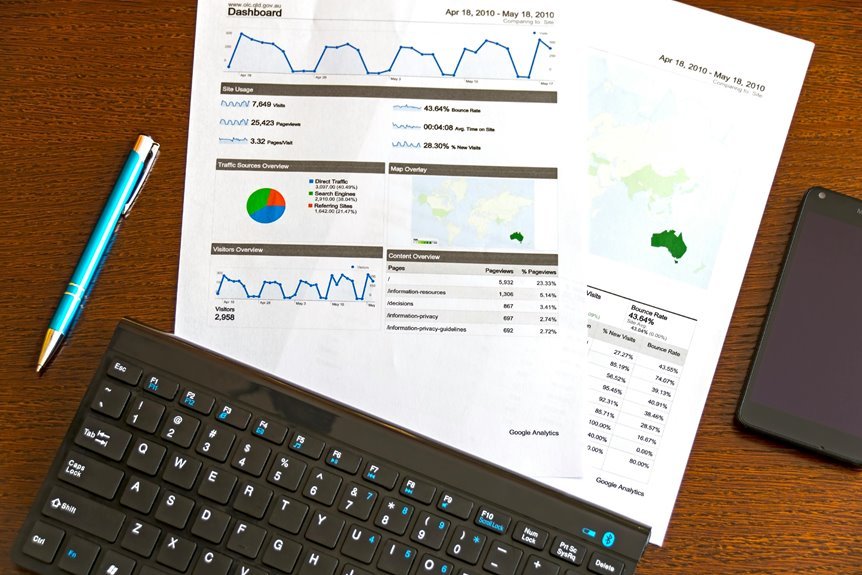
Utilizing data visualization techniques, they effectively communicate complex performance metrics, enabling stakeholders to identify trends and make informed choices.
This strategic approach fosters agility, empowering businesses to adapt swiftly to market changes and drive growth, ultimately enhancing their competitive positioning and operational efficiency.
Conclusion
In the intricate tapestry of strategic business planning, market insights serve as the vibrant threads that weave success. By harnessing data on customer demographics, psychographics, and competitive positioning, organizations can illuminate their path toward sustained growth. As they navigate the ever-changing landscape, data-driven decisions become the compass guiding them through uncertainty, ensuring they not only survive but thrive. Ultimately, the fusion of insights and strategy crafts a resilient framework, empowering businesses to seize opportunities and foster enduring relevance.


